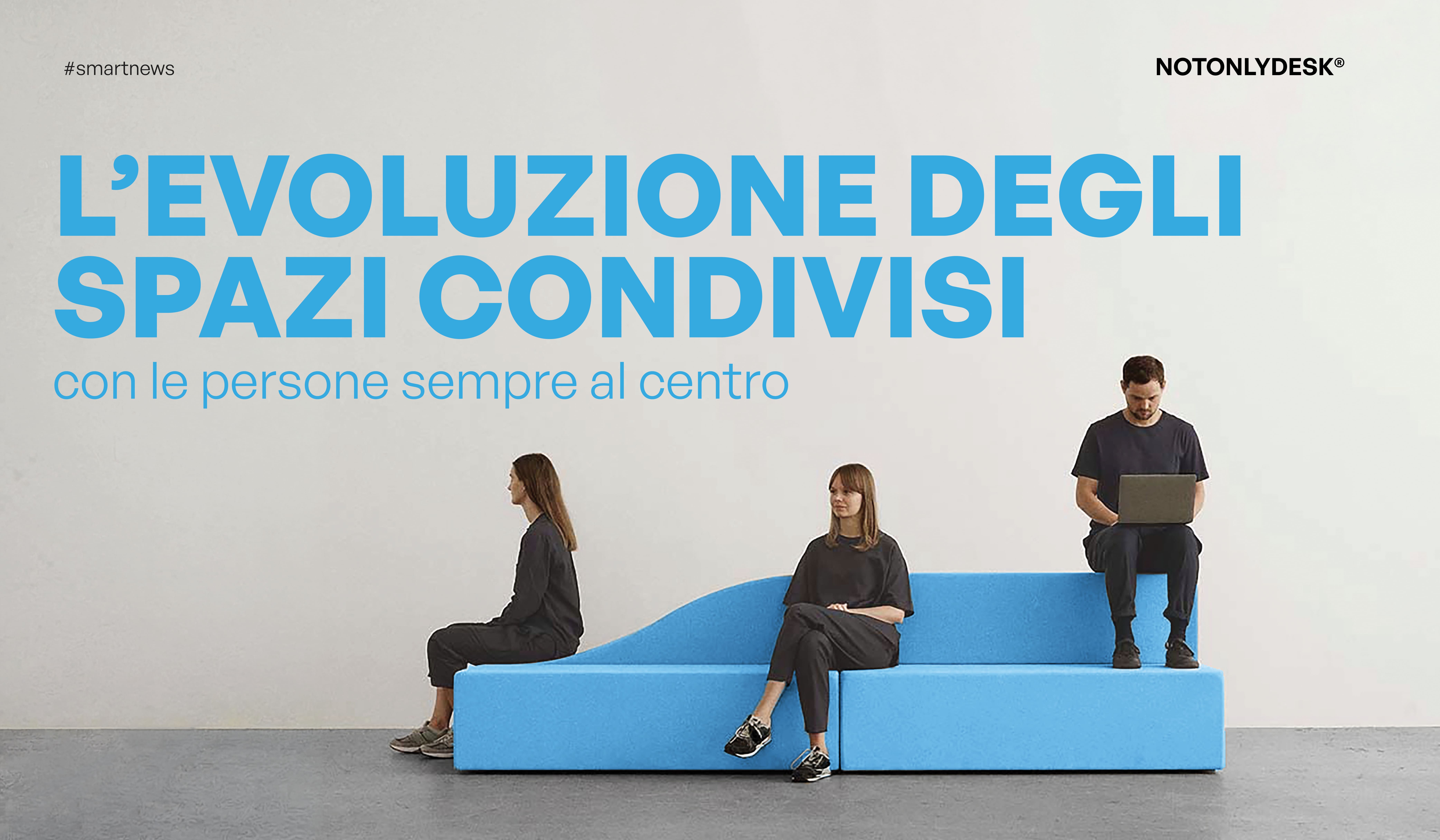
Did you know that in recent years workplaces have changed in both function and meaning?
From simple containers of desks, they have become strategic tools that impact organization, costs, and the quality of daily work. Companies that are rethinking their environments today are not just looking for flexibility, but for a more advanced way to support people and how they work.
But how did we get to this point?
● In the 2010s, shared spaces emerged as a practical response to a widespread need: working without rigid constraints. Freelancers and startups found coworking to be a sustainable alternative to traditional offices, with average savings of around 40% and an immediate benefit against isolation and professional loneliness. ● After 2020, companies began to closely observe what was happening beyond the traditional office. Hybrid models were born, integrating coworking, hot-desking, and corporate spaces dedicated to specific activities such as meetings, brainstorming, and creative work. ● Today, the focus has shifted to people: ergonomics, environmental quality, and opportunities for customization supported by data and technology.
According to recent studies (Harvard, 2025), environments designed around wellbeing can lead to up to +25% in productivity and retention. Coworking embodies this evolution: spaces that foster individual focus, connection, and continuous learning. It’s no coincidence that over 70% of users report higher motivation thanks to networking and flexibility, while the global number of spaces continues to grow.
How can you bring coworking into your company?
In light of this transformation, many companies are adopting hybrid strategies that integrate coworking as both an operational and cultural lever. 1. Reduce fixed offices and use coworking for teams and projects: estimated savings of 30% to 50% on real estate costs. 2. Organize shared work moments in coworking spaces: workshops, sprints, thematic meetings. 3. Integrate coworking days into your offering for clients and teams. Equipped meeting rooms, relaxation areas, and flexible plans increase perceived value and operational continuity, with utilization rates above 70%. 4. Evaluate local spaces with strong technological services and active communities: coworking becomes a strategic driver to transform square meters into assets for human talent.
With NOTONLYDESK
NOTONLYDESK supports companies adopting hybrid work models by providing access to coworking and flexible spaces that can be integrated into HR policies and corporate budgets. A single pass allows teams to work closer to their operational needs while maintaining cost control and full visibility over usage.
Coworking and workspaces starting from €22 per dayWith NOTONLYDESK you can book coworking spaces, workstations, private offices, and meeting rooms throughout Italy, with solutions starting from €22 + VAT per day and with no city-specific surcharges.
= 1 NODEY =
1 DESK WORKSTATION for the entire day, per employee1 MEETING ROOM for 1 hour, per employee